Why I stopped using a massage gun to fix my desk posture
If you are dealing with active inflammation, nerve pain, or rely on a calm nervous system to wind down, skip the massage gun. I tested one to ease tightness from sedentary desk work, but the aggressive stimulation and actual injury risks far outweigh the perceived muscle relief.
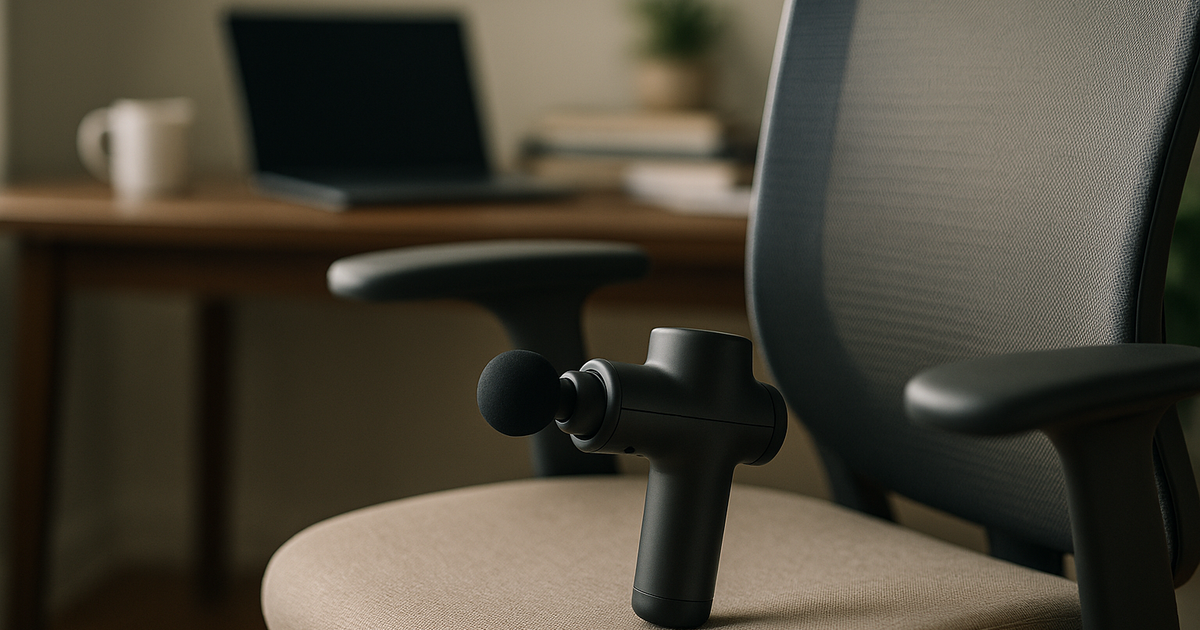
Why I bought it (context + expectation)
It was 8:00 PM on a Tuesday in my Denver apartment. The dry mountain air already makes my sleep environment fragile, so my evening wind-down is non-negotiable. I had borrowed a high-end massage gun to address the lower back tightness I get from sitting at a desk all day. Pushing the power button was a mistake. The motor roared to life, sounding like a small power drill in my living room. As a light sleeper with a baseline anxiety about noise, I felt my heart rate physically spike. I realized right there: if a tool adds stimulation at night, I am out. Quiet consistency beats aggressive settings.
How long I used it (timeline + frequency)
I ran this for a month because sleep is noisy data, and I wanted to give the tool a fair shake outside my evening hours. Shifting the experiment to mid-afternoon, I kept my sessions strictly under five minutes.
During recovery weeks, I tested it purely on my legs and shoulders to see if the percussive therapy actually accelerated my healing. Early signal looked okay, but I need longer baseline tracking before I permanently integrate a device into my life. I paid close attention to how my muscles felt the morning after a session, logging the results against my usual manual stretching routine.
Is it worth it (real gain)
Early Sunday morning, fresh off my early wake running schedule, my left calf felt deeply tight. I grabbed the massage gun, hoping to quickly flush the muscle tissue before hitting the shower. I applied the foam head to the belly of the muscle, and almost instantly, a sharp, localized pain flared up. I had hit an area of active inflammation.
Better recovery is the only metric that counts. Battering an inflamed muscle actually sets recovery back entirely. For a device that easily costs between $150 and $280, the margin for user error is dangerously high. You are basically handing a jackhammer to someone without a physical therapy degree.
Pitfalls (hidden costs + friction)
The biggest blind spot with percussive therapy is the assumption that more pressure equals faster healing. Medical data clearly shows that massage guns can cause severe damage if used over sensitive areas or applied excessively.
There are hard contraindications you have to respect. You absolutely should not use these devices on areas with rashes, active inflammation, torn ligaments, or fractures. It is incredibly easy to mistake a micro-tear from a heavy workout for standard muscle soreness, and blasting a torn muscle with high-velocity thumping will only deepen the injury. Beyond the physical risks, the auditory assault of a cheap motor easily ruins a quiet recovery environment.
Long-term changes (30/90/180 days)
After thirty days, I boxed the unit back up and returned it. My routine only works when friction stays low. The mental math required to safely use this tool—avoiding bones, screening for invisible inflammation, timing it so the noise didn't ruin my calm—was simply too much friction.
I went back to manual mobility work. Taking fifteen minutes to manually stretch or use a foam roller gives me direct sensory feedback. If something hurts, I naturally ease off. A motorized piston does not have that built-in empathy.
Who this is not for (clear boundary)
Percussive therapy is heavily marketed, but it is entirely inappropriate for several specific groups.
* Anyone with active injuries: Do not use this on fresh muscle strains, sprains, or new scars. It will disrupt the healing tissue.
* People with low bone density: The impact forces are too high and carry unnecessary fracture risks.
* Individuals prone to overstimulation: If loud motors or intense vibrations trigger your anxiety or disrupt your wind-down routine, stay away.
Alternatives (safer options)
For unwinding after long hours at a desk, simple heated pads provide deep, passive blood flow without the jarring mechanical noise. I also lean heavily on a standard, firm foam roller. The bedroom rule is fewer devices, not smarter devices. A basic lacrosse ball under the foot or against the shoulder blade works out knots perfectly well, and it operates in total silence.
One-line verdict (would I buy again?)
If a recovery tool requires this much caution to avoid injury, I stop—stick to quiet, manual stretching instead.
Related navigation: Kevin persona channel, personal-care-health cluster, long-hours-sedentary-work scenario.