Camera bag downsizing: where I drew the line on protecting my workflow
In San Diego's on-location and edit rhythm, I tested the minimalist boundary. First question: if I lose files, do I lose the client? I tried downsizing to the 21L Nomatic McKinnon Cube Pack to cut weight. It looks workable so far for casuals, but I do not recommend it for professional workflows requiring redundant storage and fast ingest.
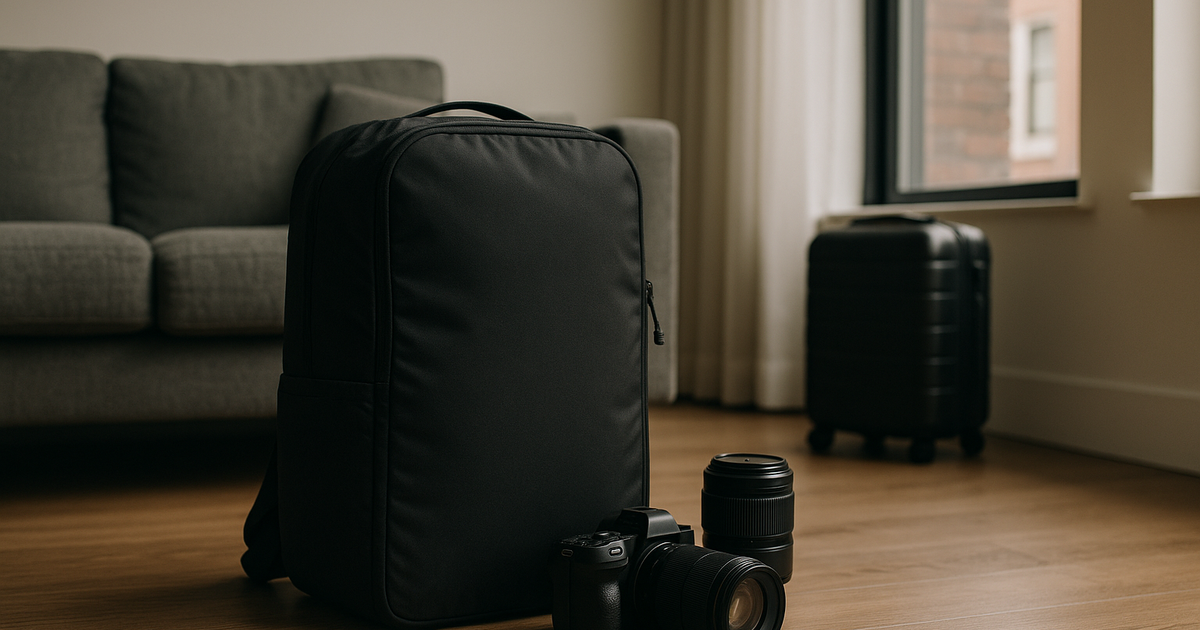
Why I bought it (context + expectation)
Weight is a tax on every shoot day. Hauling my usual heavy rig between my 1BR apartment, rental cars, and remote locations was draining my physical stamina, sometimes flaring up my lower back pain before the shoot even ended. I wanted to optimize for energy after long shoots.
I picked up the Nomatic McKinnon Cube Pack (21L) because it promised the ability to "travel fast and light." I figured a smaller 21-liter footprint would force me to be ruthless about my gear load. My theory was simple: strip away the massive, heavily padded shell, carry only the absolute essentials, and speed up my movement on location.
How long I used it (timeline + frequency)
On shoot-heavy weeks, I tested this minimalist setup at a windy beach location near Coronado. The sand was blowing sideways across the dunes, and I had my Mac + pro storage workflow tightly wedged inside the downsized pack. When I opened the main zipper, there was barely any structural lip to block the elements, and fine grit immediately coated my card reader. My stomach dropped. I realized right then that extreme downsizing strips away the exact environmental barriers my hardware requires.
I pushed this bag through about 40 days of mixed client schedules. A good tool disappears into workflow. This bag stubbornly refused to do so. Every time I needed to quickly swap a lens or check a backup drive, I found myself fighting the tight constraints of the 21-liter capacity. It simply lacked the deep, padded isolation my gear demands.
Is it worth it (real gain)
Reliability matters more than brand story. While the Cube Pack looks clever and packs down into larger luggage, squeezing a professional kit into it meant resting heavy glass directly against my portable SSDs. If I lose files, I lose trust—so I buy redundancy before speed. This bag forced me to compromise that redundancy just to get the zipper shut.
When I return from a client day, I want my gear to slide right out for ingest. Instead, I was constantly wrestling with tight compartments. The lack of rigid internal dividers meant my carefully organized loadout devolved into a cluttered mess by hour six of a shoot. It is absolutely not worth the baseline risk to your hardware.
Pitfalls (hidden costs + friction)
Arriving back at my apartment at 11 PM after a corporate event, I just wanted to initiate my drive backups and sleep. Because the 21L bag lacks dedicated tech compartments, I had to unstack two lenses and a camera body just to extract my hard drives from the bottom. It added an extra ten minutes of pointless un-packing. If setup steals editing time, it is too expensive.
Beyond the workflow friction, the physical risks are too high:
* Crush risk to data: Extreme compact bags rely on thin walls. Ample padding safeguards against bumps and drops, and the 21L sacrifices that rigid structure. Wrapping a camera in a protective layer or forcing it into a tight sleeve transfers impact shock directly to your storage drives.
* Environmental exposure: Beach/desert shoots mean dust + heat matter. While standard-size pro bags like the McKinnon 25L feature robust ripstop 80/20 nylon and polyethylene fabric for weather protection, ultra-light cubes often lack the heavy-duty zippers and overlaps needed to seal out dust. My weekly maintenance time spiked past my 80-minute tolerance just cleaning sand out of my equipment ports.
Long-term changes (30/90/180 days)
Client days punish bad systems. I realized that while I despise carrying a heavy backpack, under-protecting my gear triggers my freelance income volatility anxieties. Camera equipment coverage might save me from paying out of pocket if gear gets damaged, but insurance doesn't buy back a missed deadline or a frustrated client.
I have completely abandoned the idea of cramming a pro workflow into a minimalist daypack. I need structure, distinct zones for clean and dirty gear, and immediate access to my ingest drives.
Who this is not for (clear boundary)
This ultra-downsized approach is a disaster for anyone running a heavy Mac and pro storage setup. If you carry dual external drives, tethering cables, and need rapid access to your data without unpacking your entire bag, skip the 21L category entirely.
It is also completely unsuited for photographers working in gritty, dusty environments where thick weather-resistant materials are non-negotiable. Do not try to force a paid-gig loadout into a bag meant for casual weekend travel.
Alternatives (safer options)
I drew the line and moved back to systems that actually support a professional loadout without destroying my spine.
Lowepro Pro Trekker RLX 450 AW II
This was my ultimate solution to the weight problem. Instead of shrinking the bag, I bought wheels. It converts to a roller bag, which is incredibly helpful when navigating paved areas, airports, or client lobbies. At around $470, it sits comfortably under my $900 single-purchase limit and completely removes the weight tax from my shoulders.
Shimoda Explore V2 (35L)
For adventurous outdoor shoots where I simply cannot roll a bag, I use this. It provides the rigid protection, weather resistance, and 35-liter capacity I need for complex location work, without feeling like a massive hiking frame.
One-line verdict (would I buy again?)
Extreme bag downsizing compromises gear safety and slows down ingest; skip the 21L cubes and invest in a rolling backpack. If it adds post-shoot friction, I remove it.
Related navigation: Theo persona channel, mobility-commute cluster, frequent-relocation-rental scenario.