I Used a Super-Automatic Espresso Machine for a Year—The Maintenance Tax Ruined My Mornings
If you want hands-off caffeine, skip the super-automatic espresso route. A year into owning one, the hidden maintenance tax completely broke my morning flow. They promise push-button magic, but between constant descaling and deep cleaning, you become a part-time appliance technician.
Why I bought it (context + expectation)
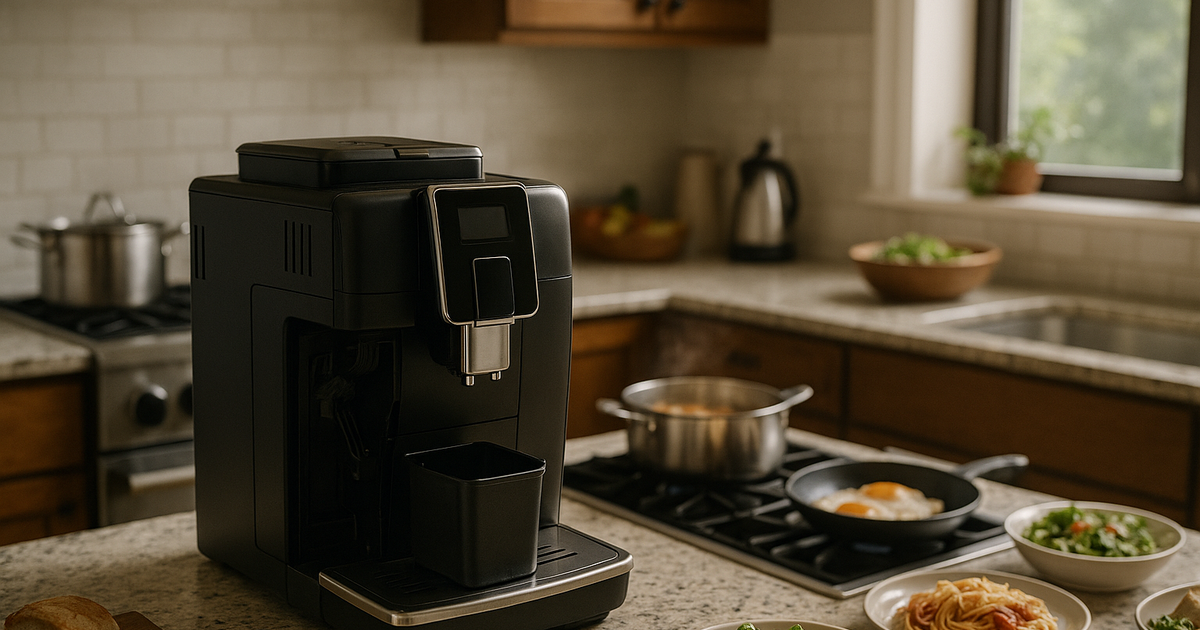
My weekday coffee window starts when the alarm drags me out of bed at 6:30 AM. Bleary-eyed in my small kitchen, I just wanted to press a button and smell roasted beans. My workflow demands an average of ~3 cups/day, and I figured an all-in-one machine would save me the messy tamping and dialing-in process. Morning flow matters more than headline specs. I needed caffeine fast, without waking up the whole floor of my apartment building. I care about the cup, not the logo, so I bought into the promise of a built-in grinder and automated milk frother thinking it would remain totally invisible at 7 AM.
How long I used it (timeline + frequency)
I ran this setup daily for exactly twelve months. The maintenance tax showed up on day fourteen. At first, the automated rinse cycles felt genuinely helpful. Then the digital prompts started multiplying out of nowhere. Empty the drip tray. Fill the water tank. Run the milk system flush. By month three, the rhythm felt less like a convenience and more like a nagging chore chart. I track cup quality over marketing claims, and honestly, the extraction was just decent—never quite hitting the rich, syrupy highs of a standalone grinder and a traditional portafilter.
Is it worth it (real gain)
Financially and practically? No. The initial purchase price hides a steep secondary cost. I looked at the actual longevity data: super-automatic machines generally last only four to eight years before dying, compared to fifteen or more for traditional manual models. If a pump fails or a proprietary plastic gear snaps, professional repair technicians charge between $100 and $150 per hour. Add in the cost of specific cleaning tablets, water filters, and replacement O-rings, and the ongoing investment spikes. You are paying a premium for a machine that essentially slowly clogs itself with coffee oils and limescale over time.
Pitfalls (hidden costs + friction)
It was midnight on a Tuesday when the descale light started flashing red. I tried to run the cycle, but the flush sequence sounded like a jet engine echoing through my 1BR apartment—a hard fail for my night noise constraints. I had to abandon the loud, whining pump until the weekend.
The daily reality is full of these frustrating friction points.
* Milk system residue: Blockages happen incredibly fast if you don't manually flush the silicone lines every single day.
* Brew group grease: Skipping the weekly internal wash leaves rancid micro-particles inside the chutes, completely ruining the bean profile.
* Descaling demands: If you brew daily, you are locked into a 45-minute descaling process every two to three months.
And don't even think about using household vinegar to speed things up. It dries out the internal gaskets and corrodes the group heads.
Long-term changes (30/90/180 days)
The biggest shift was realizing that convenience is a total illusion when the cleanup takes longer than the brew. Bad cleanup kills good flavor. By month eight, I was dreading the weekly deep clean. Taking apart the greasy brew group, soaking the components, and letting them dry consumed my weekend prep time. The bulky machine dominated my small kitchen counter, yet I found myself occasionally buying cold brew just to avoid interacting with the dirty drip tray. If the routine breaks, I will not stick with it, and this gear added way too much friction.
Who this is not for (clear boundary)
Do not buy a super-automatic if you have limited counter space or strict maintenance tolerances. If your budget is tight, the $150/hour repair risk should be an immediate dealbreaker. It is also a terrible choice for anyone with hard water who hates descaling, or folks who want a metal appliance to reliably last a decade. If you want absolute durability, avoid complex internal mechanics that rely heavily on plastic proprietary bits.
Alternatives (safer options)
I am looking into a high-quality semi-automatic machine paired with a dedicated, quiet standalone grinder. Promising, but not final. I might even explore a hand-built manual lever machine—like the Olympia Cremina—since they have a reputation for lasting a lifetime with minimal internal plumbing to fail. A simple, mechanical machine paired with a separate grinder prevents duplicate brew paths and isolates the maintenance to manageable, predictable steps.
One-line verdict (would I buy again?)
If cleanup drifts, I scale back; ditch the super-auto hype and buy a separate quiet grinder and reliable manual machine instead.
Related navigation: Zoe persona channel, kitchen-appliances cluster, weekend-cooking-family-meal scenario.