Why I Ditched Capsule Convenience for a Kalita Wave Pour-Over
The shift from pods to a manual pour-over is promising, but not final for everyone. It completely cured my stale coffee problem and freed up counter space, but it demands a different kind of morning attention. If you can spare three extra minutes, the flavor jump is undeniable.
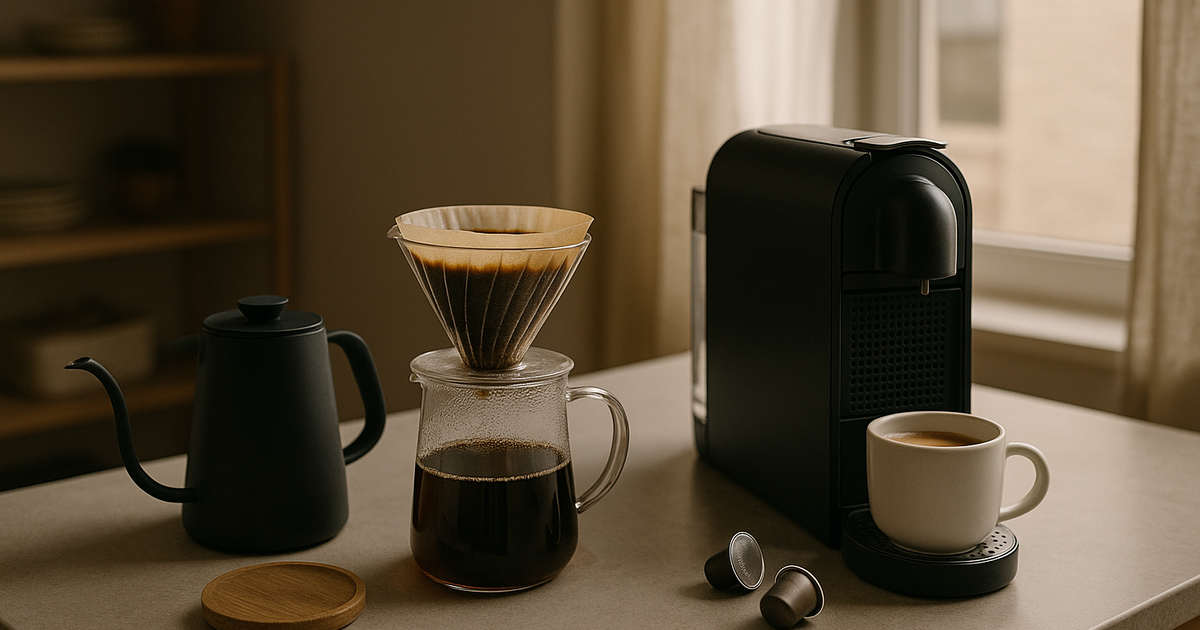
Why I bought it (context + expectation)
In my Bay Area tiny kitchen + deadline nights, I average ~3 cups/day. Caffeine is workflow, not hobby only. For years, I leaned on a standard capsule machine because it promised speed. You press a button, you get a dark liquid, you go back to your laptop. But over time, the convenience started tasting thin and distinctly sour. I realized I was settling for mediocre cups just to avoid washing a carafe.
My weekday coffee window starts when the sun barely hits the window glass, and I need a reliable catalyst. I care about the cup, not the logo. So, I decided to do a strict 90-day test: unplug the automatic pod machine and switch entirely to a manual pour-over method, specifically the Kalita Wave 185.
How long I used it (timeline + frequency)
I ran this comparison head-to-head for three full months. The first month was just figuring out my grind size and water temperature—aiming for that sweet spot around 94 degrees Celsius so the grounds wouldn't taste burnt.
The maintenance tax showed up on day 40 of my previous capsule routine. I had noticed the machine required increasingly frequent flushes to not taste funky, while the manual dripper just needed a quick rinse under the tap. By day 60, my pod machine was living in a cabinet, and the Kalita Wave had earned a permanent spot by the sink.
Is it worth it (real gain)
It was a Tuesday at 6:45 AM. I was taking a damp paper towel to the inside of my capsule machine's brewing chamber, trying to wipe away a slick, brown film. The rancid smell of old coffee oil hit my nose instantly. I scrubbed, but the greasy residue stubbornly clung to the plastic delivery spout.
Bad cleanup kills good flavor. Seeing that oily buildup hiding in the pod chamber made me realize the "convenience" of capsules was an illusion.
Switching to the pour-over was a revelation in cleanliness and taste. A pour-over specializes in giving you a cleaner, more delicate, and complex cup of coffee. The water hits the grounds, a thick bloom rises, and the resulting liquid actually tastes like the origin notes printed on the bag. Plus, a quick hot water rinse of a glass dripper takes exactly four seconds. Morning flow matters more than headline specs.
Pitfalls (hidden costs + friction)
Week two of the experiment, 7:15 AM. I woke up late, skipped boiling my water properly, and aggressively dumped a heavy stream of water straight down the center of my dripper. Five minutes later, the resulting brew was so aggressively bitter and over-extracted that I physically winced on the first sip.
There is a real learning curve here. It is dangerously easy to under-extract your grounds and brew a sharp, sour cup, or to over-extract and get a mouthful of bitterness. You have to pay attention to your pour speed and keep your water between 93 and 96 degrees Celsius.
Also, a specific warning on the gear: I initially looked at the large stainless steel version of the Kalita Wave, but quickly learned it suffers from a frustrating design flaw where the bottom holes can easily clog and stall the brew. I opted for glass instead.
Long-term changes (30/90/180 days)
A good tool should feel invisible at 7 AM. Once my muscle memory adapted to the gooseneck kettle, the manual routine actually felt more peaceful than the mechanical whir and pump of an electric machine.
Living in a 1BR apartment, footprint matters tremendously. Getting a bulky plastic machine off my small kitchen counter opened up a surprising amount of prep space. There is also a massive drop in daily waste. Instead of tossing plastic or aluminum pods into a recycling bin and hoping for the best, I just tap a biodegradable paper filter of wet grounds directly into the compost.
Who this is not for (clear boundary)
If the routine breaks, I will not stick with it. I adapted to the pour-over rhythm because I work from home and can take a five-minute screen break.
If you are rushing out the door by 6:30 AM with kids pulling at your legs, skip this. You cannot automate a pour-over. You have to stand there and pour the water yourself. If you refuse to buy a decent burr grinder or a gooseneck kettle, you will likely just end up frustrated with inconsistent, muddy-tasting coffee.
Alternatives (safer options)
If you want a slightly different flavor profile, the Hario V60 02 is the modern coffee classic. It pushes a more dynamic, acidity-forward cup, but it absolutely will punish you for sloppy pouring techniques. I chose the Kalita specifically because its flat bottom is way more forgiving to a sleepy, imperfect pour.
Another option is the Clever Dripper. It combines immersion brewing with a paper filter, meaning you just add water, wait a few minutes, and drain it into your mug. It requires virtually zero technique.
One-line verdict (would I buy again?)
If taste and cleanup both hold, I keep it—and the Kalita Wave's superior flavor and zero-residue cleanup easily beat out capsule convenience.
Related navigation: Zoe persona channel, kitchen-appliances cluster, small-apartment-living scenario.