We Tried Replacing Our Prep Tools with a 14-Cup Food Processor—Here’s Why It Failed Our Weeknight Test
With dual incomes and two kids, time is scarcer than money. If you have infinite dishwasher space and love hand-washing sharp blades, a heavy 14-cup food processor might work. For our household, the hidden cleanup wiped out any prep speed. We switched back to a $40 mini-chopper.
Why I bought it (context + expectation)
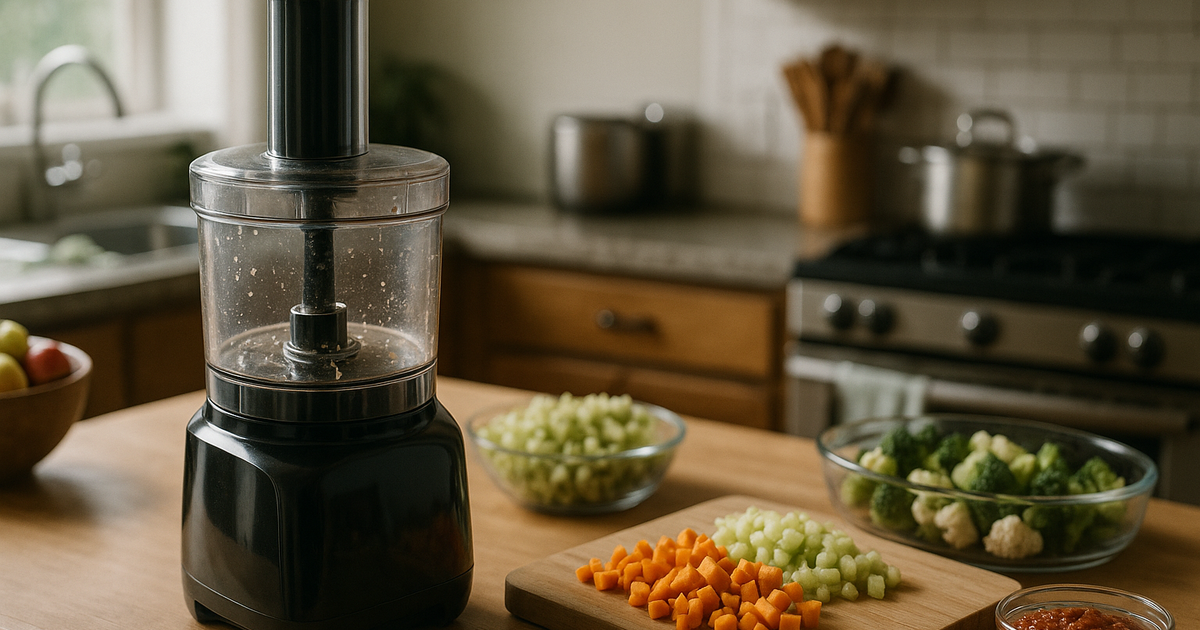
On a Sunday afternoon last November, I stood at the kitchen counter of our Jersey City rowhouse, staring at three pounds of carrots and a block of cheddar. The trigger for buying a massive 14-cup food processor was right there: speeding up weekend meal prep for four.
I wanted to eliminate the box grater, the mandoline, and endless dicing. At $350, it was well under our joint big-ticket threshold of roughly $700, so we made the purchase. I watched the machine shred everything in 45 seconds flat. But the reality hit when I spent fifteen minutes carefully scrubbing the four-piece lid assembly and the razor-sharp blade. Family systems break at hidden upkeep.
How long I used it (timeline + frequency)
On school-night evenings, we measure minutes saved per week. I tracked our kitchen workflow with this appliance for exactly six months.
Initially, it felt like a massive win. Smooth hummus. Quick zucchini grating for hidden-veggie muffins. But gradually, the massive 16-inch-tall base just sat there gathering dust. It became an object we actively avoided. Pulling it out of the lower cabinet felt like a full workout, and the mental math of the cleanup cost always made us hesitate.
Is it worth it (real gain)
Our bottleneck is minutes, not dollars. Did it actually save time? No. Time saved at 7 PM is worth more than weekend tinkering.
Slicing a cucumber in three seconds sounds incredibly efficient. But dragging out a 16-pound motor base, locking the bowl, finding the right disc, and tackling the specialized washing? That took longer than just grabbing a sharp chef's knife. Cleaning throughput is a family KPI for us. When a single appliance creates a massive traffic jam in the sink, any slicing efficiency evaporates instantly. Weeknight bandwidth is the real constraint.
Pitfalls (hidden costs + friction)
Flash forward to a Tues 6:30 PM post-dinner rush. I had just initiated the kitchen cleanup handoff to my partner. He picked up the bulky 14-cup bowl at the sink, fumbled the S-blade, and nearly nicked his finger. The machine stayed unwashed on the counter until I handled it the next morning. If both of us cannot run it, it fails. I value handoff clarity over clever features.
The second massive issue is physical footprint. In a rowhouse, our constraints are noise and storage. The sheer volume of the accessories—three different blades, two shredding discs, and a dough blade—required an entire dedicated drawer. Finally, the dishwasher footprint is absurd. Putting the bowl and lid in the top rack eliminated space for the kids' lunchboxes. If it adds another weekly chore, it’s out.
Long-term changes (30/90/180 days)
Six months in, our kitchen workflow reverted to baseline. I realized that a stable routine beats a flashy upgrade.
I gave the massive food processor to my sister, who handles bulk cooking on Sundays. Once the machine left the premises, our counter space opened up immediately. The evening handoff between adults became frictionless again. No more negotiating who had to wash the scary blade. The underlying anxiety of dealing with a specialized cleanup task vanished entirely.
Who this is not for (clear boundary)
If you run a sprawling suburban kitchen and own a massive dishwasher, you might love this. It shreds twenty potatoes for a holiday gratin without breaking a sweat.
But it is entirely the wrong choice for households running on a tight daily schedule. Skip it if you lack deep storage drawers. Avoid it entirely if you hate hand-washing sharp, specialized plastic parts.
Alternatives (safer options)
In two-working-parent weeks, simplicity wins. We replaced the do-it-all giant with two much simpler items.
- A $40, 3-cup mini food chopper. Dishwasher-safe. Zero space footprint. Perfect for single-batch hummus.
- A high-quality stainless steel mandoline. Fast slicing. Ten-second rinse.
These two tools handle 95% of what we actually needed, without the maintenance drag. Works so far in our current routine.
One-line verdict (would I buy again?)
If coordination load rises, we change course—so the 14-cup behemoth is out, and our reliable $40 mini-chopper is back on prep duty.
Related navigation: Sarah persona channel, kitchen-appliances cluster, weekend-cooking-family-meal scenario.