I Tested a $800 Wet-Dry Floor Cleaner for Six Months to Speed Up STR Turnovers
I tested a premium wet-dry vacuum for six months to speed up my STR floor cleaning. While they wash and vacuum simultaneously, the post-clean maintenance trap creates serious odor risks. For back-to-back rentals, the extra machine upkeep completely erases the time you save on the floors.
Why I bought it (context + expectation)
It was a Sunday check-out at 11:00 AM, and I found half a box of cereal crunched into my duplex STR unit's kitchen floor. I usually run a standard vacuum followed by a wet mop, but sweeping up that sticky, dusty mess took far too long. I needed a better system.
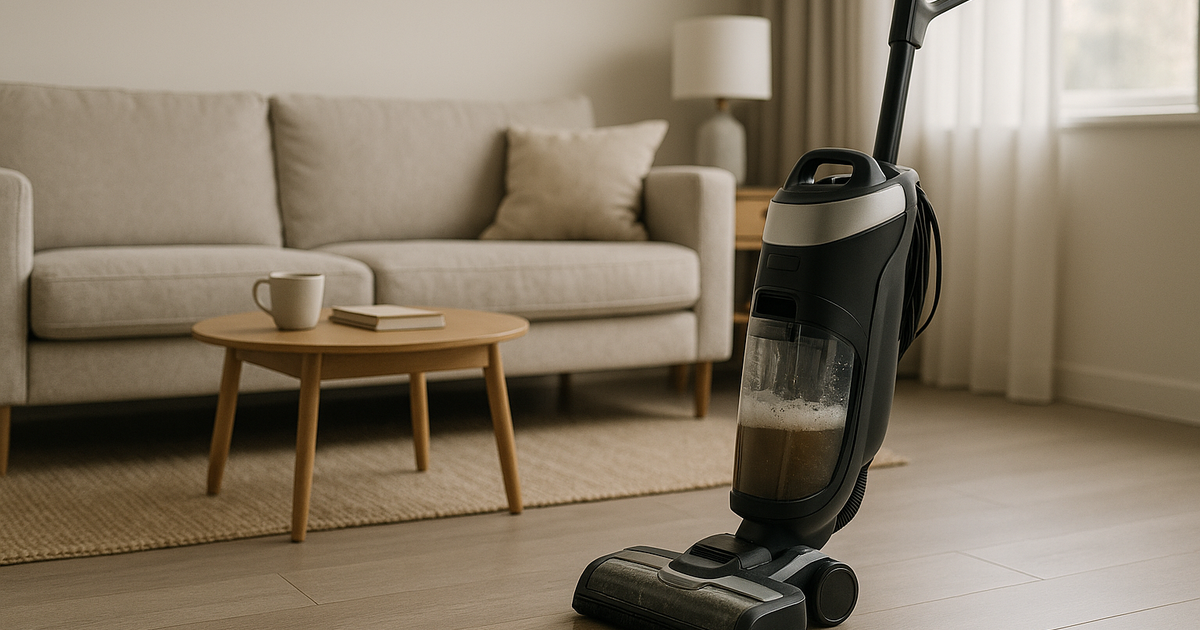
For my boutique hosting workflow, efficiency is everything. Being an STR operator in Las Vegas heat + dust means hard floors get extremely dirty, very fast. I thought a wet-dry vacuum would be my ultimate shortcut. The promise of tackling both liquid spills and solid desert dust simultaneously sounded like a massive operational upgrade. My joint CapEx threshold is ~USD 850, so I bought a premium model—the Tineco Floor One S7 Stretch Ultra—which retails right near that limit. I wanted a single tool that could handle our high-traffic hard floors without forcing me to switch equipment mid-turnover.
How long I used it (timeline + frequency)
I ran this hybrid floor cleaner across my owner-occupied duplex and the adjacent rental unit for six full months. Early on, the technology felt promising with limits. The auto-dirt detect sensors genuinely picked up fine desert dust I couldn't even see, and the flooring looked incredibly sharp right out of the gate.
However, an appliance like this needs validation across high-occupancy periods. As the summer peak season hit, we were flipping the unit three or four times a week. I relied on the machine's up to 30 minutes of battery life to sprint through the entire floor plan. It handled the daily dust removal flawlessly, but I quickly realized the physical toll it took. These units are significantly heavier and bulkier than a traditional stick vacuum, making them exhausting to maneuver around tight bedroom furniture and bathroom vanities.
Is it worth it (real gain)
In theory, hitting wet and dry messes in one pass is a dream. In practice? Not for my business. Turnover minutes and odor are core KPIs for my rentals. While the machine does save you from filling up and emptying a traditional mop bucket, it just transfers that manual labor directly to the device itself.
In STR, the metric is minutes per turnover. Cleaning the dirty water tank and rinsing the roller brush after every single use is absolutely mandatory. If my cleaning assistant or I rush through a flip and forget to deep-clean the vacuum's internals, we have a disaster waiting in the utility closet. Guest comfort is my first KPI, and dragging a heavy machine around only to spend an extra fifteen minutes scrubbing its dirty water reservoir simply doesn't yield a positive ROI for my schedule.
Pitfalls (hidden costs + friction)
It was a July afternoon, right at 11:30 AM during a brutal back-to-back turnover. I opened the hall utility closet to grab some supplies and was hit by a foul, sour swamp smell. It turned out the wet-dry vacuum's dirty water tank hadn't been fully rinsed the day before.
Bad maintenance timing hurts reviews, and skipping even one wash cycle on these machines leads to immediate bacterial buildup and horrible odors. Guests don’t care about specs—they care about smell and noise. Having a stinky vacuum closet is a massive liability. Another major flaw is handling actual messes. I tried using it to suck up some dropped pet kibble in the kitchen, but the brush roller just plowed the large dry debris across the room. Needing to pre-sweep large items completely defeats the "all-in-one" convenience. Plus, you absolutely cannot use these on unsealed or unfinished wood because the excess moisture causes severe warping.
Long-term changes (30/90/180 days)
I optimize for repeatable service quality, which means I need tools that survive back-to-back turnovers without requiring their own dedicated maintenance window. Over the six months, my workflow actually became more complicated. A dirty or clogged filter noticeably dropped the suction power, meaning I was constantly monitoring the machine's health instead of focusing on the guest experience.
Quiet and clean are non-negotiable in small units. Because of the maintenance overhead and the constant risk of foul smells lingering in the cleaning closet, I stopped leaving the wet-dry vac in the STR entirely. It now lives exclusively in my personal living space, where I have the patience and time to clean it properly after a leisurely weekend chore.
Who this is not for (clear boundary)
If operations strain rises, I simplify fast. I strongly advise against these machines for any high-volume short-term rental host or commercial cleaner. The operational friction of scrubbing out a filthy water tank between guest stays is far too high.
They are also a poor fit for anyone with lots of large debris—like heavy pet food spills—or homes with unsealed hardwood floors where water absorption can cause structural damage over time.
Alternatives (safer options)
I’ve reverted to a two-step system: a high-powered, lightweight cordless stick vacuum followed by a commercial microfiber flat mop. Yes, it requires walking the room twice. But the stick vacuum handles large debris without pushing it around, and throwing a flat mop pad into the washing machine takes five seconds.
A traditional, separated setup completely eliminates the risk of a dirty water tank brewing bacteria in your closet. If it risks reviews, I replace it. The simple vacuum-and-mop combination is infinitely more reliable for strict, high-speed cleaning schedules.
One-line verdict (would I buy again?)
Wet-dry vacuums deliver incredibly clean floors, but the punishing post-clean maintenance and odor risks make them a poor investment for high-speed STR turnovers.
Related navigation: Marta persona channel, home-cleaning cluster, small-apartment-living scenario.