Why I Traded Smart Earbuds for a Simple White Noise Machine to Protect My Sleep
For my sleep window, environmental control is non-negotiable. If you need complete digital silence, active noise-canceling earbuds might tempt you, but they add unwanted physical friction to your night. For my money, room-scale audio masking with a basic white noise machine is the better, lower-stress upgrade.
Why I bought it (context + expectation)
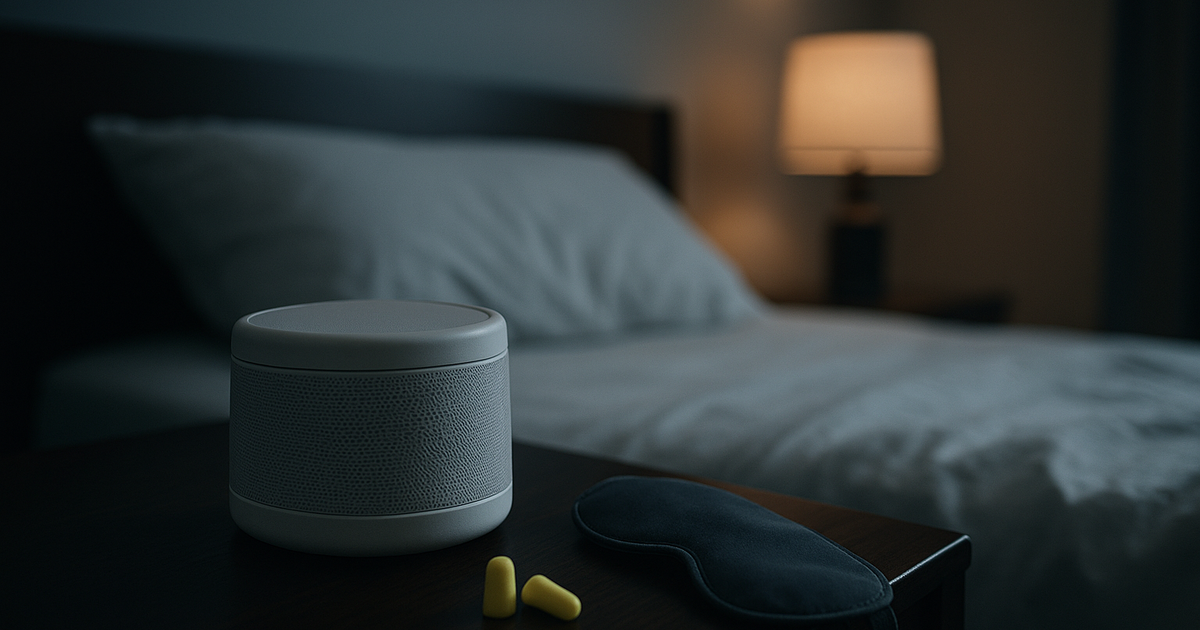
It was 8:30 PM on a Tuesday, right as my Denver neighborhood was winding down for the night. A neighbor's dog started barking, and I felt that familiar baseline anxiety about noise creeping in. I turned on the Manta White Noise Machine, and within seconds, the room's soundscape flattened out into a steady, rushing hum. I felt my shoulders drop immediately.
I protect sleep first, then optimize. My early wake running schedule means my evening wind-down is non-negotiable. I used to look into heavy soundproofing methods—like installing a second layer of 5/8” drywall with noiseproofing compound or upgrading to solid core doors with seal kits. As a renter, those structural changes are entirely impossible. I needed a way to mask sudden, disruptive noises without rebuilding my apartment walls. The bedroom rule is fewer devices, not smarter devices. I simply wanted something that sat on my nightstand and did one job well without requiring a screen.
How long I used it (timeline + frequency)
I ran this for a month because sleep is noisy data… You simply cannot judge a sleep intervention by a single weekend. I set up the Manta machine to generate its seamless, lifelike audio every single night.
During recovery weeks, I am particularly sensitive to any changes in my environment. I noticed early on that the gapless sound profile meant my brain wasn't constantly searching for audio loops. I track trend lines, not one-night wins. Over thirty days, maintaining a steady acoustic shield gave me a highly consistent baseline to measure my rest against.
Is it worth it (real gain)
Early signal looks good, and the minimal investment has paid off for my specific daily routine. The Manta machine is explicitly designed to spread soothing sounds across the room to mask disruptions. Instead of jumping at the sound of a passing truck or a heavy-footed upstairs neighbor, I just hear a continuous, predictable wash of static.
Quiet consistency beats aggressive settings. I don't actually want absolute, dead silence in my apartment because it makes the inevitable occasional noise feel even louder by contrast. By raising the noise floor of my bedroom, those sudden volume spikes just disappear into the background. Better recovery is the only metric that counts. Because I am no longer being micro-awakened by random city sounds, my deep sleep phases remain completely uninterrupted.
Pitfalls (hidden costs + friction)
Around 2:00 AM during my second week of testing, I woke up with an itchy, uncomfortable sensation in my left ear. I had tried supplementing the white noise with reusable silicone earplugs, but the physical friction was maddening. I pulled the plug out, tossed it on the nightstand, and realized I hate having foreign objects in my ears while I rest.
There are real physical downsides to chasing total silence. If a tool adds stimulation at night, I am out. Reusable silicone earplugs can actually be quite risky; their sticky texture means they can become lodged in the ear canal or even break apart, leaving fragments stuck inside. Beyond breakage, constant earplug use over time can push earwax deeper, potentially causing temporary hearing loss or tinnitus.
There is also a psychological pitfall to consider with room audio. Some individuals report becoming dependent on white noise machines to fall asleep. I have indeed noticed that when I travel, sleeping without that familiar hum takes slightly longer. It is a trade-off I willingly accept for my daily routine, but it remains a genuine risk if you spend half the year in hotels.
Long-term changes (30/90/180 days)
Chronic noise, even at very low levels, can cause annoyance and stress that actively contribute to cardiovascular issues and metabolic disturbances over the long haul. Before standardizing my room's acoustics, I carried a low-level physical tension into bed every night. Now, switching the machine on acts as a reliable auditory cue that the day is officially over.
I do not claim this as medical advice, but lowering my nighttime environmental stress has noticeably smoothed out my resting heart rate data overnight. Less fragmentation in my sleep architecture simply means I wake up with the actual energy required for my morning mileage.
Who this is not for (clear boundary)
If you want complete acoustic isolation, a simple sound machine will not be enough. Masking is not erasing. Those dealing with extremely loud environments might prefer installing acoustic sound absorbing panels, which actually reduce reverberation and transmission from adjacent units.
Additionally, if you are drawn to active noise-canceling headphones to block out the world, be aware of the trade-offs. Too much artificial noise reduction can alter how your brain processes sound, and some users experience mild dizziness or pressure sensations in their ears. My routine only works when friction stays low, so wearing active electronics in bed is a hard pass for my setup.
Alternatives (safer options)
If your main issue is heavy, low-frequency impact noise—like a neighbor's booming footsteps—the Tuft & Needle White Noise Machine is an excellent alternative. It runs significantly louder than an average box fan, making it highly effective at drowning out deep, echoing sounds through the floorboards.
For those who truly need physical noise blocking and are willing to tolerate having items in their ears, EARPEACE Sleep Earplugs are a safer bet than sticky silicone putty. They are designed to reduce disruptive noises like snoring, and well-fitted traditional plugs can reduce sound levels by a solid 33dB without the risk of fragmentation.
One-line verdict (would I buy again?)
Room-scale sound masking provides steady, low-friction relief from nighttime noise without the physical risks of earplugs; if recovery metrics improve, I keep it.
Related navigation: Kevin persona channel, audio-noise-control cluster, nighttime-quiet-needs scenario.